🚛 Fort Wayne, Indiana · Towing Guide · 2026
Flatbed vs Wheel-Lift Towing — Which One Does Your Car Actually Need?
The wrong towing method for your vehicle type can cause drivetrain damage that costs more than the tow itself. Here’s how to know which one applies — and why it matters more for AWD and 4WD vehicles.
What’s the actual difference between flatbed and wheel-lift?
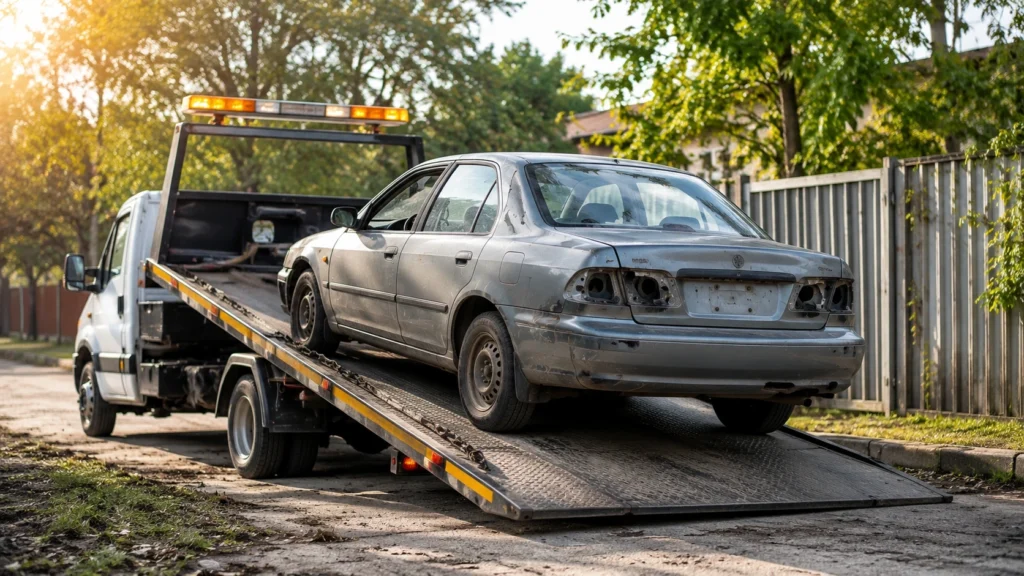
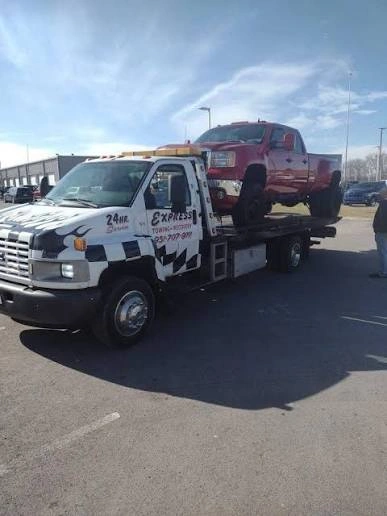
A flatbed tow truck has a flat deck that tilts hydraulically. The vehicle being towed drives or is winched onto the deck and rides with all four wheels completely off the road. Nothing is moving, nothing is dragging, nothing is under stress during the haul.
A wheel-lift truck uses a metal yoke that slides under the front or rear tires, lifting one end of the vehicle while the other two wheels stay on the road. It’s faster to hook up and works fine for the right vehicle in the right situation. The problem comes when it’s used on vehicles that shouldn’t be towed that way.
Quick reference: which method for which vehicle
| Vehicle type | Correct method | Why |
|---|---|---|
| Standard FWD car (Honda Civic, Toyota Camry, etc.) | ✅ Either — wheel-lift OK for short hauls | Front wheels lifted, rear wheels roll freely with no drivetrain engagement |
| AWD vehicle (Subaru, RAV4, CR-V, etc.) | 🚫 Flatbed only — always | Differential and transfer case will sustain damage if any wheels roll while towed |
| 4WD truck or SUV | 🚫 Flatbed only | Same transfer case risk as AWD — no exceptions |
| Rear-wheel drive (classic cars, some trucks) | ✅ Front wheel-lift acceptable | Lifting the front puts the driving wheels in the air |
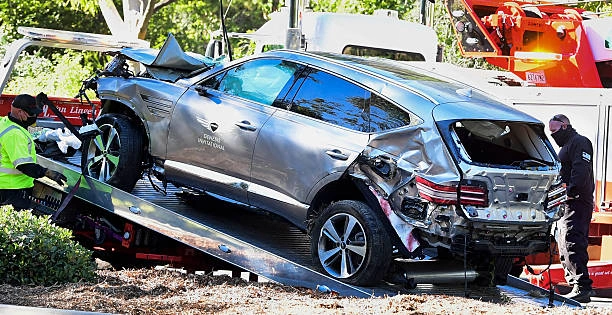
| Crash-damaged vehicle | 🚫 Flatbed only | Unknown structural damage — wheel contact risks further harm |
| Lowered car / custom suspension | 🚫 Flatbed only | Wheel-lift yoke can contact body panels or modified undercarriage |
| Long distance haul (50+ miles) | 🚫 Flatbed strongly preferred | Even on FWD, extended highway speed towing accumulates drivetrain stress |
Why AWD is the most mishandled vehicle type in towing
AWD vehicles are common in Fort Wayne — the climate justifies them. Subaru Outbacks, Toyota RAV4s, Honda CR-Vs, and similar vehicles make up a significant chunk of local traffic. They’re also the vehicle type most often damaged by incorrect towing.
Here’s what happens when an AWD is towed on a wheel-lift: two wheels are lifted in the air, two wheels stay on the ground and roll as the truck moves. The drivetrain on an AWD vehicle is mechanically connected across all four wheels through the transfer case and center differential. When two wheels roll without the engine running, the transfer case is turning — but with no lubrication being circulated (because the pump only operates when the engine is on).
The damage doesn’t always show up immediately. Sometimes a driver gets home fine and notices transmission or AWD issues weeks later. A transfer case rebuild on an AWD can run $1,500-$3,000 or more. That’s what an incorrect towing method costs.
Our TROCP-certified drivers know this. Flatbed is the default for every AWD call we handle. We don’t debate it — the flatbed is the right tool for the vehicle.
The loading direction matters too
On a flatbed, vehicles should be loaded nose-forward for highway hauls. Vehicles are designed aerodynamically to travel forward — towing a car backwards at 65 mph on I-69 creates drag on the rear spoiler, trunk, and other components that aren’t built for that kind of wind load.
This sounds minor, but on a long haul from Fort Wayne to Indianapolis or Columbus, it’s not. One of the YouTube transcripts from a Fort Wayne towing operator specifically mentions flipping a vehicle around so it travels nose-forward on the interstate rather than backwards — that’s correct practice, and it’s what TROCP training covers.
Soft straps vs chain hooks — what’s actually touching your tires
On a flatbed, the vehicle is secured with soft tire straps — loops that go around the tire and attach to anchor points on the deck. Done properly, nothing metal ever contacts the wheel or body of the car. Chain hooks attached directly to the frame or bumper are an older method that can scratch, dent, or stress mounting points.
Our drivers use soft-tie wheel straps. The goal is that the vehicle arrives at its destination with zero evidence that it was ever loaded onto a truck — same condition as when it was picked up.
Flatbed vs wheel-lift — your questions
Yes, always. AWD vehicles must be towed on a flatbed with all four wheels off the ground. Towing an AWD with two wheels on the road — even for a short distance — forces the differential and transfer case to work in ways they’re not designed for without the engine running. The damage doesn’t always show up immediately, but it accumulates. We default to flatbed for every AWD call.
Usually yes — flatbeds typically run $15-30 more than wheel-lift for the same distance. But for vehicles that need a flatbed (AWD, 4WD, crash-damaged, lowered), paying extra for the right equipment protects you from drivetrain damage that costs far more than the price difference. We use flatbed as our default and will tell you if a wheel-lift is actually appropriate for your vehicle and situation.
Done correctly on the right vehicle, no. A wheel-lift holds the vehicle by the tires, which is safe for standard front-wheel-drive cars on short hauls. The risk comes when it’s used on the wrong vehicle — AWD, damaged, or long-distance hauls where drivetrain wear accumulates. An experienced TROCP-certified driver will assess the vehicle before deciding which method applies.
Not necessarily wrong, but not ideal. Vehicles are designed to move forward aerodynamically — towing backwards at highway speed creates drag on components that aren’t built for it and can stress rear sections. The right approach for a long interstate haul is loading the vehicle nose-forward on the flatbed, which is what our TROCP-certified drivers do.
Not sure which type your car needs?
Tell us your vehicle year, make, and model when you call. We'll confirm the right equipment before the truck leaves dispatch. AWD always gets a flatbed — no exceptions.