What to Do After a Car Accident in Fort Wayne, Indiana
A crash is disorienting. The adrenaline kicks in, you’re not sure if anyone is hurt, other drivers are pulling over, and your brain is trying to process five things at once. The steps you take in the first 10 minutes after an accident in Fort Wayne matter — for your safety, for any insurance claim, and for protecting yourself legally.
This guide covers exactly what to do, in order, after a vehicle collision in Fort Wayne or Allen County — whether it’s a fender-bender in a Glenbrook area parking lot or a serious accident on I-469.
Step 1: Check for injuries before anything else
Before you look at the damage, ask yourself and anyone in your vehicle: is anyone hurt? Even if the answer seems like no, adrenaline can mask pain from whiplash or soft-tissue injuries that show up hours later. Don’t assume everyone is fine just because no one is screaming.
If there are visible injuries or anyone is unconscious, call 911 immediately. Don’t move someone who may have a neck or spine injury unless they’re in immediate danger (fire, traffic). In Fort Wayne, emergency response to major accident scenes on I-69 and I-469 typically runs 8-15 minutes. Stay on the line with dispatch.
If everyone appears unhurt, you still need to call 911 or the non-emergency line (260-449-3000) for any crash that caused property damage over $1,000 — which is most multi-vehicle crashes. Indiana law requires this report, and skipping it can create legal complications if the other driver later claims injury or disputes the facts.
Step 2: Move to safety if the car is drivable
Indiana’s ‘Move Over’ duty applies to everyone on the road, including accident participants. If your car is drivable and it’s physically safe to move, get it onto the shoulder or into a nearby parking area. A stopped vehicle in a travel lane on I-69 or I-469 creates a secondary crash risk — studies consistently show that rear-end collisions into stopped accident scenes are common, especially at highway speed and in poor visibility.
The spots where this matters most in Fort Wayne: the I-69/I-469 interchange where traffic doesn’t slow quickly, the US-24 approach to the river bridges where the shoulder narrows, and SR-14 in the Waynedale area where the road curves. If the car isn’t drivable, hazard lights on, everyone stays inside with seatbelts on, and you wait.
Step 3: Document everything — photos before anything moves
Your phone camera is your most important tool in the first five minutes after an accident. Take photos before anyone moves the vehicles, before debris gets kicked aside, and before any fluid on the road evaporates or gets absorbed.
What to photograph: both vehicles from multiple angles, the position of each vehicle in the lane, any visible damage, the road surface (especially if there’s ice, debris, or a pothole involved), traffic signals or signage nearby, skid marks if present, and any visible injuries.
If the other driver is cooperative, get a photo of their insurance card and license. Write down or screenshot the make, model, color, and license plate of the other vehicle immediately — not after the fact. In tense situations, memories of these details shift fast.
Exchange information — what you actually need
| Information to collect | Why it matters |
|---|---|
| Other driver’s name and license number | Insurance claim requires identification of the other party |
| Insurance company and policy number | Your insurer needs this to contact them directly |
| Vehicle make, model, year, plate | Confirms the vehicle involved if disputes arise later |
| Names and phone numbers of witnesses | Witness accounts carry weight if the other driver disputes your version |
| Police report number | Insurance adjusters request this; it locks in the official record of events |
Step 4: Don’t say more than you need to
This one is harder in practice than it sounds. After a crash, people want to apologize, explain themselves, or reconstruct what happened. Don’t. Anything you say at the scene — to the other driver, to bystanders, even to police beyond the factual sequence of events — can be used later in ways you didn’t intend.
‘I’m sorry’ feels like basic human decency but it’s also an admission of fault in some legal contexts. ‘I didn’t see you’ tells the other party something about your attention. ‘I was just going through the light’ introduces a traffic law interpretation. Keep it factual with police: where you were, what direction you were traveling, what you observed. Let the insurance adjusters and police reports sort out fault.
Step 5: Choosing your tow company — this matters more than most people realize
When police arrive at an accident scene in Fort Wayne, they typically call a rotation tow company. Fort Wayne’s towing rotation contract has been a source of public controversy: Parker Towing has held the city’s exclusive contract since 2013, with renewals that bypassed the public bidding process allowed by an Indiana code provision. Over that period, customer rates rose from $30 to $85. Blue Eagle Towing’s Mark Campbell raised this at city council, arguing that a rotation system would give multiple local operators a fair shot at city work.
The practical point for you: Indiana law gives you the right to choose your own towing company at any accident scene where you’re physically able to make a call and the scene is safe. If you call (260) 555-0100 before the police-dispatched truck arrives, tell the responding officer that towing has already been arranged. You don’t have to go with whoever the city calls.
Under Indiana House Enrolled Act 1390 (2025), you’re also entitled to a fully itemized invoice on every tow — not a single total, but a breakdown of every charge. Keep that invoice for your insurance claim. Most Indiana auto policies that include towing coverage require an itemized receipt for reimbursement.
Fort Wayne accident hotspots — where crashes happen most
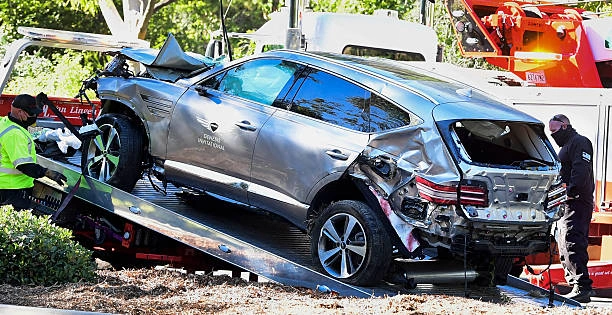
The I-469/US-24 interchange is consistently one of Allen County’s busiest accident locations — complex merge patterns, highway speed limits, and heavy commercial traffic converging. The river bridges (St. Marys, St. Joseph, Maumee) ice early in winter and generate accident calls regularly. SR-14 in Waynedale, Coliseum Boulevard at Illinois Road, and the US-30/US-24 corridor all see elevated crash frequency. If you commute these routes regularly, knowing what to do after a crash isn’t hypothetical.
Step 6: File your insurance claim promptly
Most Indiana insurance policies require you to report an accident within a specific window — often 24 to 72 hours. Call your insurer as soon as possible after the crash, even if you’re not sure whether you’ll file a claim. Reporting and filing are different things; reporting preserves your options.
What your adjuster will ask for: the police report number, photos from the scene, the other driver’s insurance information, contact information for any witnesses, and receipts for any immediate expenses (towing invoice, rental car, initial medical treatment).
If you’re not at fault, Indiana is a comparative fault state — meaning both parties’ percentage of fault affects any recovery. If a police report assigns partial fault to you, it doesn’t necessarily mean you can’t recover anything, but it does affect the math. Having clear photo documentation and a detailed witness account strengthens your position.
When to see a doctor — even if you feel fine right now
Whiplash, soft-tissue injuries, and some concussion symptoms don’t present immediately after a crash. The adrenaline of the situation suppresses pain signals. Many crash victims feel fine at the scene and begin experiencing neck or back pain 12-48 hours later. If there’s any chance of injury — head hit the headrest, airbag deployed, significant impact — see a doctor within 24 hours. Medical records from that visit establish a timeline that’s important for any injury claim.
Is my car safe to drive after an accident?
This is the question most people get wrong. Visible damage doesn’t tell the whole story, and a car that seems to drive normally can have structural problems that make it dangerous.
- Deployed airbag — don’t drive it. The airbag system is disabled after deployment and other safety systems may be affected. The car needs an inspection before it’s driven again.
- Visible frame damage or misaligned doors/hood — don’t drive it. Frame damage affects how the car handles in normal driving and makes it structurally unsafe in another crash.
- Wheel or tire damage — don’t drive it. A bent wheel, damaged tie rod, or misaligned suspension can cause sudden loss of control at highway speed.
- Fluid leaking under the car — don’t drive it. Brake fluid leak is a direct safety risk. Engine oil or coolant leaks risk further damage or fire.
- Warning lights that weren’t there before — get it checked before highway driving. Some systems that affect vehicle stability won’t present obviously at low speed.
If any of the above apply, a tow is the right call — even if the car technically moves. The cost of a tow is a fraction of what secondary damage from driving a compromised vehicle can cost, and it’s nothing compared to the safety risk.
Common questions after a crash in Fort Wayne
Indiana law requires you to report any accident involving injury, death, or property damage exceeding $1,000. In Fort Wayne, that threshold covers most multi-vehicle crashes. Even for minor fender-benders, filing a police report protects you if the other driver later disputes the facts of what happened. Call 911 for injury crashes; the non-emergency line (260-449-3000) for property-damage-only situations.
Indiana’s “Move Over” law applies to drivers too — if the vehicle is drivable and it’s safe to do so, you should move it off the travel lanes to the shoulder. On I-69 and I-469, staying in a travel lane creates a secondary accident risk that’s more dangerous than the original crash. If the car isn’t drivable, turn on hazard lights and stay inside with your seatbelt on until police arrive.
No. In Indiana, you have the right to request your own towing company at any accident scene. Fort Wayne has had ongoing controversy about its towing rotation contract — Parker Towing has held the city’s exclusive contract since 2013 without public bidding, and customer rates rose from $30 to $85 over that period. If you’re able to make a call and the scene is safe, you can contact your own tow company. Call (260) 555-0100 and tell the responding officer you’ve already arranged towing.
Indiana’s 2025 towing law requires every towing company to give you a fully itemized invoice — not just a total. Every charge must be listed separately. If you dispute any charge, you can pay 70% of the contested amount to retrieve your vehicle while the complaint is investigated. Keep the invoice for your insurance claim — it’s also required documentation for reimbursement under most Indiana auto policies.
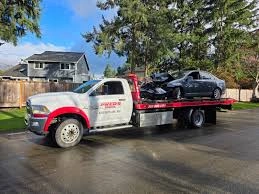
Just had an accident in Fort Wayne?
If the car isn’t drivable or you’re not sure it’s safe, call us directly. We handle accident towing throughout Fort Wayne and Allen County — flatbed as the default for collision-damaged vehicles, photo documentation at pickup, and you choose where it goes.