❄️ Fort Wayne, Indiana · Winter Safety Guide · 2026
How to Survive a Fort Wayne Winter Breakdown
33 inches of snow a year. Wind chills in the single digits. River bridges that ice before the roads around them. Fort Wayne winters are serious — and a winter breakdown here is different from one in October. Here’s what you need to know.
Why Fort Wayne winters are hard on vehicles — the actual numbers
Allen County averages about 33 inches of snow annually, with the heaviest accumulation typically falling in January and February. Wind chills regularly drop into the single digits and occasionally below zero. The river confluence at Fort Wayne — where the St. Marys, St. Joseph, and Maumee Rivers meet — creates microclimatic conditions where the bridges over those rivers ice before surrounding roads.
For vehicles, this translates to: batteries that fail to cold-start (the #1 winter service call in Allen County), black ice conditions that cause slide-offs, road salt damage to tires and undercarriage over time, and the very specific risk of black ice on river bridges that catches even experienced local drivers off guard in early winter.
December and January are our two busiest months every year. The pattern is predictable — and so is most of the preparation that would have prevented the call.
If your car breaks down in winter — exactly what to do
🛑 Immediate (first 60 seconds)
- Signal and coast to the right shoulder or a parking area — get off the road
- Hazard lights on before anything else
- Stay inside the car with seatbelt on if you’re near traffic
- If engine still runs — idle it intermittently for heat, but not in a closed space
📞 Next steps (first 5 minutes)
- Call (260) 279-6688 — give your location, road name, and direction
- Put on your blanket or extra clothing while you wait
- Keep your phone battery above 20% — don’t run any unnecessary apps
- Crack a window slightly if running the engine for heat — carbon monoxide precaution
The 5 things that should be in your car all winter in Allen County
| Item | Why it matters in Fort Wayne specifically |
|---|---|
| 🛏️ Blanket or sleeping bag | A stopped car drops to outside temperature in 30-60 minutes at Fort Wayne winter lows. Blanket buys you time while waiting for the truck. |
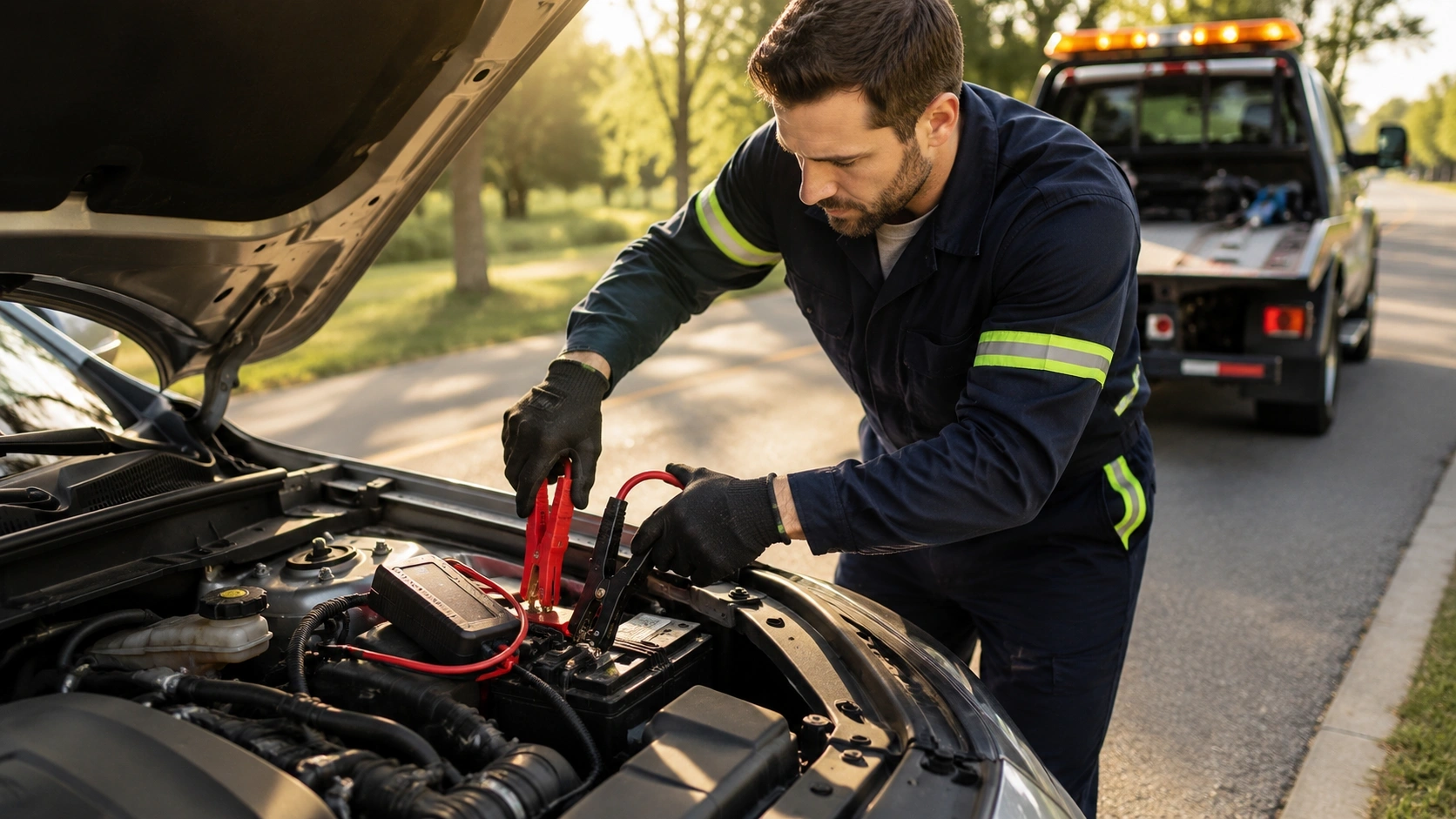
| 🔋 Portable jump pack | Battery failures spike when temps drop below 10°F — common in January and February. A jump pack means you may not need a service call at all. |
| 📱 Car charger or power bank | Cold temperatures drain phone batteries faster. A dead phone when your car is dead is a compounding problem. |
| 🔦 LED flashlight | Fort Wayne averages early sunsets by December. A breakdown at 5:30pm is already dark. Visibility matters both for you and for other drivers seeing you. |
| 🧂 Sand or cat litter (small bag) | Scattered under drive wheels when stuck in snow gives traction without a push. Takes 2 minutes and weighs almost nothing. |
Black ice in Fort Wayne — where it forms and what to do when you hit it
Black ice is the most deceptive road condition Fort Wayne drivers face. It forms when moisture on the road surface freezes at or below 32°F — but because it’s very thin and transparent, it’s essentially invisible against dark asphalt. It looks like a wet road.
In Fort Wayne, the highest-risk locations for black ice are:
- River bridge decks (St. Marys, St. Joseph, Maumee) — bridge decks cool faster because air circulates underneath, so they ice before the approach roads on either side
- SR-14 in the Waynedale area — a known early-ice stretch, especially in the early morning
- Low-lying sections of I-469 near drainage areas
- Open sections of US-24 east of Fort Wayne toward Woodburn where shade from surrounding terrain keeps ice longer into the morning
- Shaded sections of county roads around Grabill and Leo-Cedarville that don’t get direct sun until mid-morning
If you feel sudden loss of traction on what appeared to be a clear road: ease off the accelerator (do not brake hard), steer gently in the direction you want to go, and let the car slow naturally. Hard braking on ice causes the wheels to lock and makes steering control worse. If you have ABS, it will pulse the brakes for you — your job is to steer.
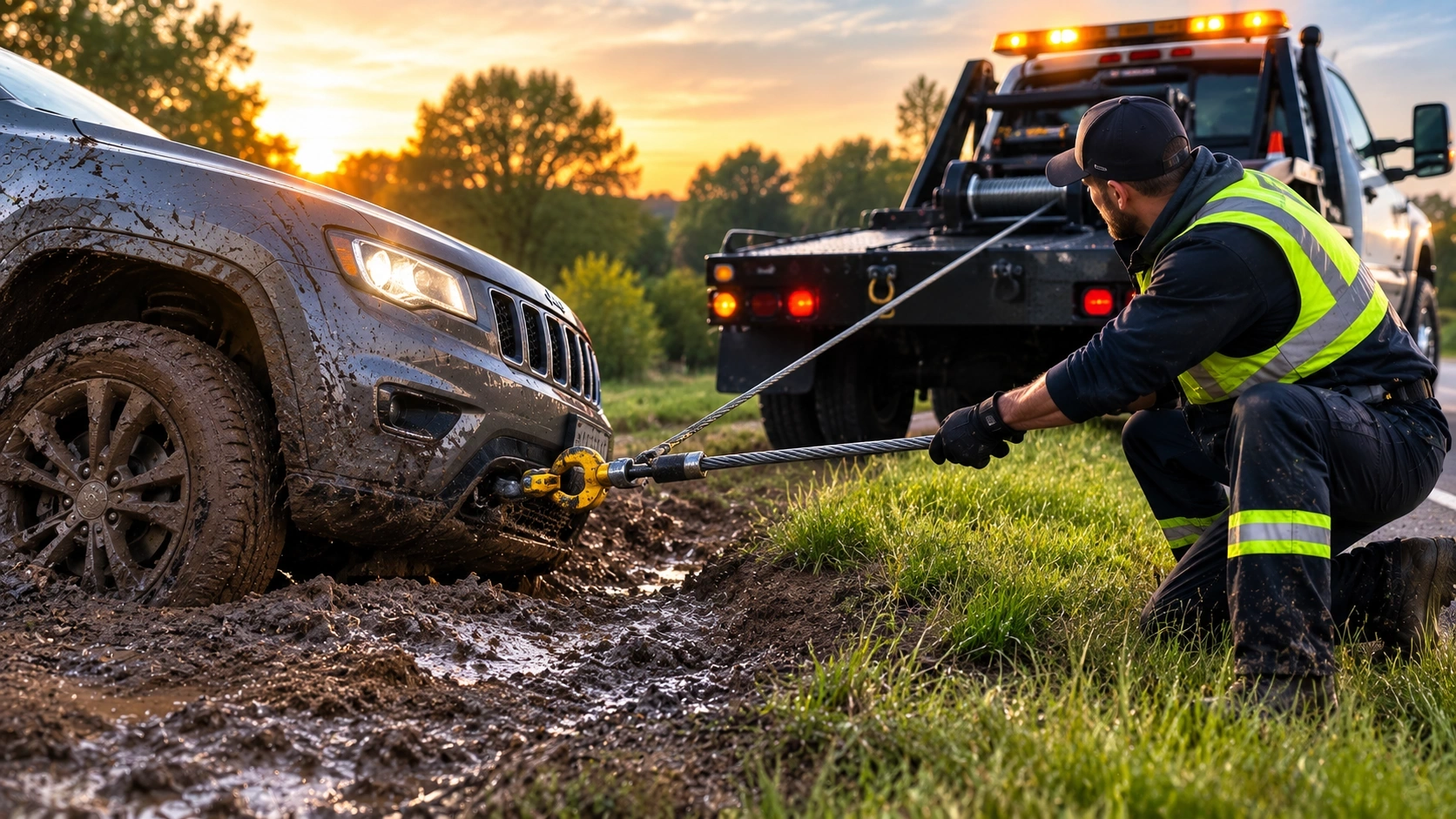
If you slide off the road onto a soft shoulder or into a ditch: turn on your hazard lights, don’t try to spin your way out (you’ll dig deeper), and call us. Winch-outs from ditch slides are a regular winter job and are best handled with proper equipment and technique rather than a tow truck bumper and a chain.
Fort Wayne winter breakdown — answered
A car retains heat reasonably well for 30-60 minutes in most winter conditions. After that, temperature inside the car drops toward outside temperature. At -5°F wind chill — common in Fort Wayne in January — that window closes faster. If you can run the engine intermittently (and carbon monoxide risk is low — engine running, not in a garage), you can extend this significantly. The blanket you should be keeping in your car handles the rest.
Black ice forms when moisture on road surfaces — from rain, snowmelt, or morning humidity — freezes at temperatures at or below 32°F. It’s transparent, which is why it’s invisible against asphalt. Bridge decks cool faster than surrounding roads because air circulates underneath — which is why the St. Marys, St. Joseph, and Maumee River bridges in Fort Wayne ice over earlier and harder than nearby streets. Low-lying stretches near drainage areas are also prone.
Any battery more than 3 years old should be tested before November. A battery at 70-80% health in October can fail to cold-start a vehicle when temperatures drop below 10°F. The test is free at most auto parts stores and takes about 5 minutes. Finding out your battery needs replacement in October costs $100-$150. Finding out at 6am on a January morning in your Waynedale driveway costs that plus the service call.
Don’t try to drive out by spinning the tires — you’ll dig deeper into soft ground or snow. Turn on your hazard lights, stay in the car if you’re in a traffic area, and call (260) 279-6688. Describe your location and approximately how far off the road the vehicle is. We bring winch equipment for exactly this type of recovery. The first pull needs to be assessed carefully to avoid making the position worse.
Stuck in a Fort Wayne winter right now?
We dispatch 24 hours, including during snowstorms. Tell us where you are, what happened, and we'll give you a real ETA based on actual conditions — not a promise we can't keep.