📋 Fort Wayne, Indiana · Public Interest Report · 2026
Fort Wayne’s Towing Contract Controversy — What Drivers Should Know
Parker Towing has held Fort Wayne’s exclusive police-dispatched towing contract since 2013 — without a public competitive bid. Customer rates rose from $30 to $85 over that period. City Council has acknowledged the problem. Here’s the full story and what it means for your rights as a driver.
The facts — what actually happened with Fort Wayne’s towing contract
In 2013, the City of Fort Wayne entered into an exclusive towing contract with Parker Towing. That contract gave Parker the exclusive right to handle police-dispatched towing across the city — meaning any time Fort Wayne police called for a tow truck, Parker was the company that came.
Towing contracts are typically put out for competitive bid — the same process cities use for road paving, building maintenance, and other services. Competitive bidding protects taxpayers and service users by creating price competition and preventing any single vendor from holding a monopoly indefinitely.
Fort Wayne’s contract with Parker was not rebid at its initial three-year expiration. An Indiana code provision allows certain contracts to renew without competitive bidding as long as the cost to the city (not the cost to customers) doesn’t increase. Parker’s contract has been renewed three times under this provision, covering more than 10 consecutive years without a public bid.
The distinction between ‘cost to the city’ and ‘cost to customers’ is where the controversy lies. Parker’s rates to customers — drivers whose vehicles were towed by police dispatch — rose from $30 to $85 between 2013 and the time the issue came before city council. The city paid the same amount it always had. Drivers who were towed paid significantly more.
What the competitors said at city council
Blue Eagle Towing’s Mark Campbell — whose company was established in 1977 and has operated in Fort Wayne for decades — appeared at city council to argue for a rotation system. His argument wasn’t just about business competition; it was a structural one: multiple qualified operators sharing city work creates accountability, competition, and better service outcomes for drivers.
Campbell said: ‘It’s not just my towing company versus his towing company, it’s a united front of the employers of this city that run this industry.’ He noted that Indianapolis and many other Indiana cities use rotation systems where the city maintains a list of qualified operators and dispatches them in order.
Parker’s attorney, Andy Boxberger, argued against the rotation approach — saying it was ‘confusing’ and that police wouldn’t know who to call, and that Parker had invested in infrastructure for the city contract. He suggested that competitors wanted Parker’s contract rather than genuinely advocating for drivers.
City Councilman Russ Yale acknowledged the issue directly, saying the contract not going to public bid in over 10 years was a concern: ‘It’s just a bedrock principle of good government — you competitively bid contracts. That’s just part of good government, and then when there’s a concern like this it just doesn’t look right, it doesn’t feel right.’
What Indiana HEA 1390 (2025) changed for Fort Wayne drivers
Regardless of which company responds to a police-dispatched tow, Indiana’s 2025 towing law gives you specific rights that apply in every situation:
- You’re entitled to a fully itemized invoice on every tow — not a total, but a breakdown of every charge separately
- If you dispute any charge, you can pay 70% of the contested amount and retrieve your vehicle while the complaint is investigated
- No towing company can refuse to release your vehicle while the 70% payment is being processed
- For private calls (not police-dispatched), you always have the right to choose your towing company
- For police-dispatched tows, if you can physically make a phone call and the scene is safe, you can request your own company before the dispatched truck arrives
These rights exist specifically because situations like Fort Wayne’s towing contract — where a single operator controls police-dispatched work without competitive pressure — create conditions where drivers have less ability to shop around.
Fort Wayne towing contract — answered
No. Indiana law gives you the right to request your own towing company at any accident or breakdown scene where you’re physically able to make the call and the scene is safe. Police may recommend or call a rotation company — but for your private vehicle on a private call, you choose. Call (260) 279-6688 and tell the responding officer you’ve arranged towing. The driver won’t be able to legally override your choice.
An Indiana code provision allows certain city contracts to renew without competitive bidding as long as the cost to the city doesn’t increase. The city has used this to renew Parker Towing’s contract three times since 2013. The cost to the city of Fort Wayne has stayed flat — but the rates charged to customers being towed rose from $30 to $85 over that same period. City Council members acknowledged the situation in public sessions.
Under Indiana House Enrolled Act 1390 (2025), if you dispute any towing charge, you can pay 70% of the contested amount to retrieve your vehicle while your complaint is investigated. The towing company cannot hold your vehicle hostage while the dispute is pending as long as the 70% is paid. This law was enacted specifically to address predatory towing practices in Indiana — including concerns raised in Fort Wayne.
Mark Campbell of Blue Eagle Towing argued that Fort Wayne should adopt a rotation system — as Indianapolis and many other cities do — where multiple qualified local operators share city-dispatched towing work. He said: “It’s not just my towing company versus his towing company, it’s a united front of the employers of this city that run this industry.” The argument was that competition would improve both service quality and pricing for drivers.
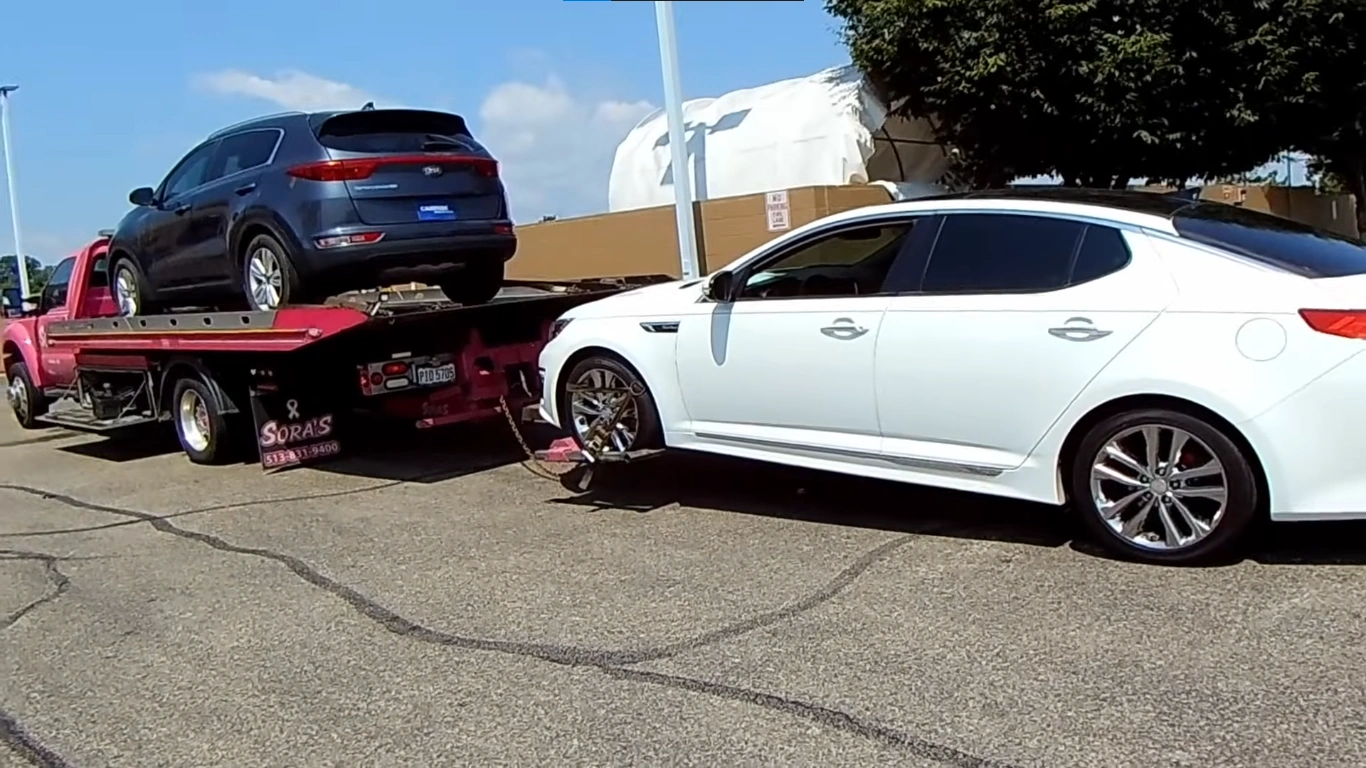
Exercise your right to choose your own tow company
In Fort Wayne, you don't have to accept whoever the police call. If you can make a phone call, call us. Flat price, itemized receipt, TROCP-certified driver — your rights protected on every call.