
🚗 Fort Wayne, Indiana · 24-Hour Roadside Help · (260) 279-6688
What to Do When Your Car Breaks Down
It doesn’t matter if you’re on I-69 at rush hour or parked in your Waynedale driveway at 7am — the first five minutes after a breakdown determine whether things get worse or get handled. Here’s exactly what to do.
Every driver in Fort Wayne has had it happen — or will. The car makes a sound it shouldn’t, a warning light comes on, or things just stop. What you do in the next few minutes matters more than most people realize. The wrong move can turn a $100 roadside fix into a $2,000 repair, or worse, turn a broken-down car into a highway accident.
This guide covers the exact steps to take, in order — whether you’re dealing with a dead battery on a cold January morning in Aboite, a tire blowout on US-30 heading toward Columbia City, or a complete engine stall on I-469.
What to do when your car breaks down — in order
Signal and get off the road
Turn your blinker on and coast toward the right shoulder or the nearest parking area. Don’t brake hard — gradual deceleration is safer and gives drivers behind you time to react. Get as far right as physically possible. On I-469 or I-69, a few extra feet of distance from the travel lane can matter.
Hazard lights on immediately
Before you do anything else — before you call anyone, before you look at the engine — turn your hazard lights on. In Fort Wayne winters, poor visibility from snow, fog, or early darkness makes a stopped car with no lights genuinely dangerous. Don’t skip this step even if you’re only stopped for a minute.
Stay inside on highways, assess on surface streets
If you’re on I-69, I-469, US-30, or any road where traffic moves at highway speed: stay in the car with your seatbelt on. A stopped vehicle on a highway shoulder is hit more often than most people expect. On a surface street or parking area, getting out is less risky — but stay away from the traffic side of the vehicle.
Call for help — and describe what actually happened
Call (260) 279-6688. When you call, tell us: your location (road name, direction, mile marker or cross street), what the car did before it stopped (noise, warning light, just died, overheated), and your vehicle type. That information helps us send the right equipment and gives us a head start on what might be needed when we arrive.
Don’t try to fix what you can’t see clearly
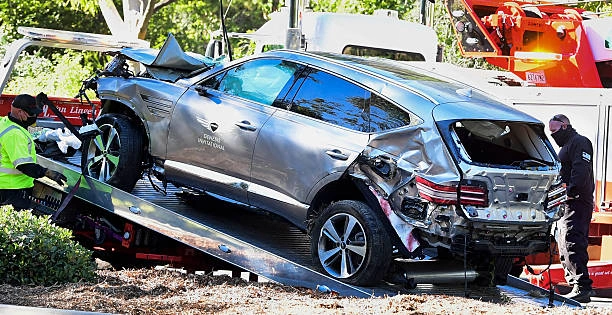
Opening the hood when steam is coming out, trying to push a car that won’t go into neutral, or attempting to change a tire on a live highway shoulder are all situations that create more problems than they solve. If you’re not sure what happened, wait for the truck. A TROCP-certified driver can assess the situation when they arrive without guessing from a phone description.
Know where you want the car to go
Have a destination in mind before the truck arrives — your usual mechanic, a dealership, or at minimum a general area. You choose where the vehicle goes, not the tow company. If you don’t have a shop preference, we can suggest options based on what your car likely needs. You’re never pressured toward any specific shop — under Indiana law and our own policy, the destination is entirely your call.
Does every breakdown need a tow?
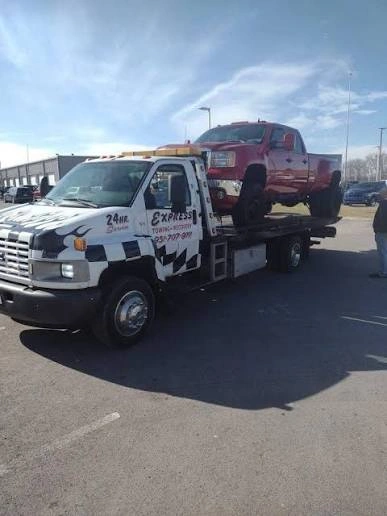
No — and calling a tow truck for something that can be fixed roadside costs you more time and money than necessary. Here’s a quick breakdown of what usually needs a tow versus what can be handled on the spot:
| Situation | Tow needed? | What actually helps |
|---|---|---|
| Dead battery, no start | ⚠️ Maybe | Jump start first — if it holds, you drive; if not, tow |
| Flat tire with usable spare | ❌ Usually not | Roadside tire change — spare installed, you drive |
| Out of gas | ❌ No | Fuel delivery — 2-3 gallons gets you to the nearest station |
| Locked keys inside | ❌ No | Lockout service — non-destructive entry |
| Overheating (steam from hood) | ✅ Yes | Don’t drive — coolant system failure can destroy an engine in miles |
| Won’t shift, transmission slip | ✅ Yes | Every mile driven damages drivetrain components further |
| Accident with visible damage | ✅ Yes | Frame or wheel damage — unsafe to drive even if it moves |
| Battery won’t hold after jump | ⚠️ Maybe | On-site battery replacement if we carry your size, or tow to shop |
When you call us, describe what happened. We carry jump equipment, can change tires, and deliver fuel — all in the same visit if needed. A tow isn’t always the first step.
Fort Wayne breakdown hotspots — where calls come from most
After handling thousands of calls across Allen County, these are the locations that generate the most breakdowns and roadside calls:
🌨️ Winter hotspots
- River bridges (St. Marys, St. Joseph, Maumee) — ice before roads around them
- SR-14 near Waynedale — early ice, known problem stretch
- I-469/US-24 interchange — high-speed, complex merges, winter accidents
- Open I-69 north of Fort Wayne toward Huntertown — drifting conditions
- US-24 east toward Woodburn — open farmland, zero wind breaks
🛞 Year-round breakdown spots
- US-30 between Fort Wayne and Columbia City — semi traffic, limited lighting
- Coliseum Boulevard at Illinois Road — heavy cross-traffic, lane changes
- SR-930 in New Haven — industrial traffic, debris on road
- Georgetown/Lima Road — high volume, stop-and-go, battery drain from short trips
- Glenbrook area parking lots — lockouts spike here year-round
Breaking down in Fort Wayne winter — what’s different
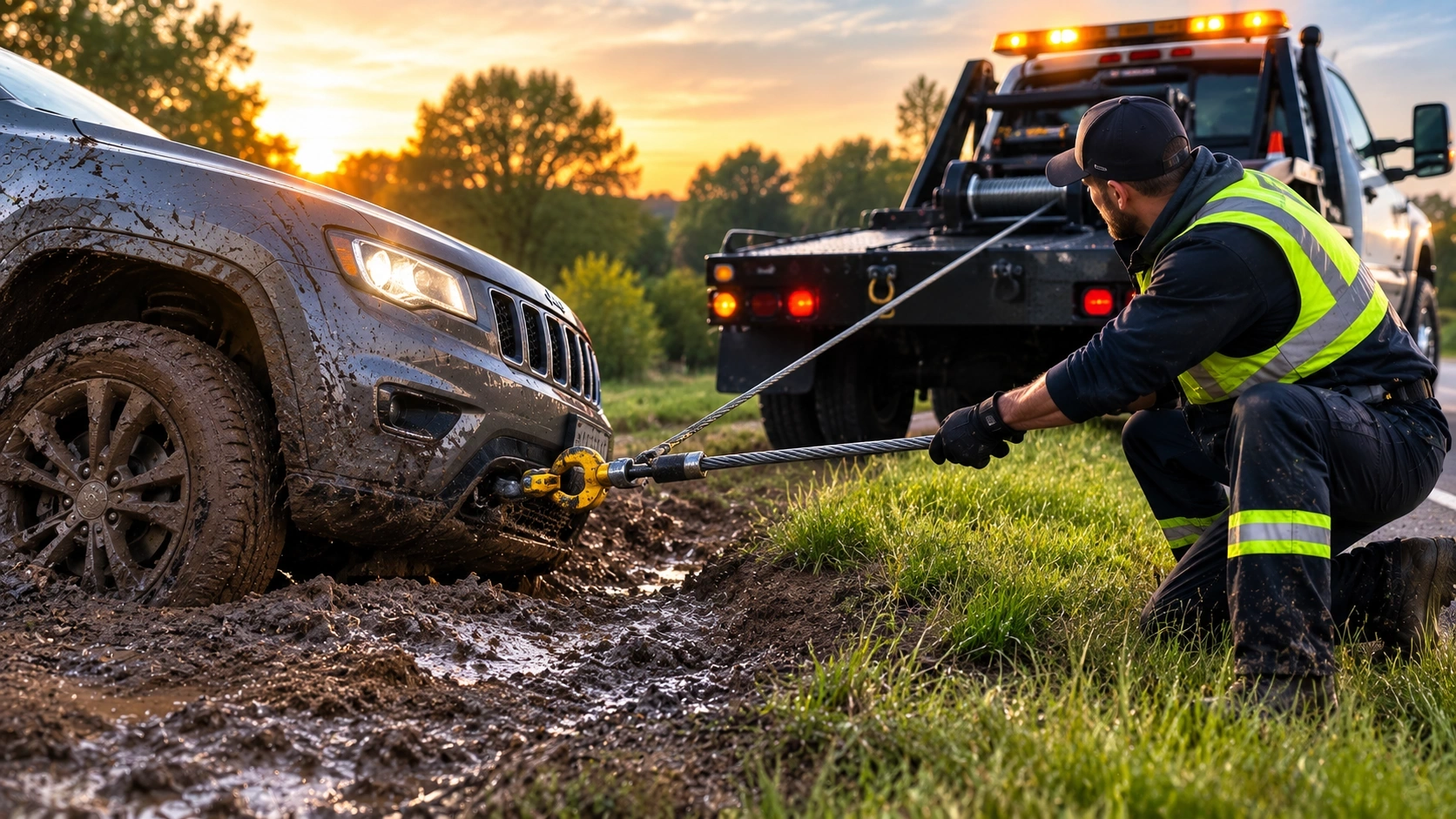
Allen County averages about 33 inches of snow per year, with temperatures that regularly drop below 10°F from December through February. A breakdown in those conditions isn’t the same as one on a mild October afternoon. A few things that change:
Battery failures happen faster in cold. A battery that’s at 70% health in fall can fail to start a cold engine when temperatures drop below 10°F — the chemical reaction inside the battery slows dramatically in the cold. December and January are our two busiest months for jump start and battery replacement calls across Allen County.
Hypothermia risk is real if you leave the car. If you break down on a rural county road near Grabill or Harlan and there’s no shelter nearby, staying in the car is genuinely the safer option. Keep a blanket in the vehicle from November through March — this is practical advice, not paranoia. A car retains heat for 30-60 minutes in most conditions even with the engine off.
Black ice is invisible. If your car suddenly slides or loses traction without any obvious reason, you may have hit black ice. Don’t brake hard — ease off the gas, steer gently in the direction you want to go, and get the car stopped slowly. The river bridges in Fort Wayne (St. Marys, St. Joseph, Maumee) ice over before the surrounding roads and are the source of many winter accident calls.
What to keep in your car during Fort Wayne winters
- Jumper cables or a portable jump pack — your own or a neighbor’s
- A blanket or sleeping bag in the back
- A phone charger (car charger or power bank)
- A small bag of sand or cat litter for tire traction
- A snow brush and ice scraper
- A flashlight or emergency reflective triangles
Car breakdown questions — answered
Get off the road safely. Signal, coast to the shoulder or a parking area, and turn your hazard lights on before anything else. Once you’re stopped somewhere safe, call for help. On I-69 or I-469, staying even partially in a travel lane is dangerous — traffic doesn’t slow down for a stopped car at 70 mph. Hazard lights on, car as far right as possible, then call (260) 279-6688.
On a highway — stay inside with your seatbelt on. Standing on a highway shoulder is more dangerous than being in a stopped car. If the car is on fire or there’s another immediate danger, get out and move away from traffic. On a surface street or parking area where the risk is lower, outside the car with you away from traffic is fine. In Fort Wayne winters, staying inside is also the warmer option.
For calls within Fort Wayne city limits — Waynedale, Georgetown, Aboite, Downtown — we average 15 minutes or less in normal conditions. Outer areas like New Haven or Huntertown run 20-28 minutes. Highway calls on I-69 or I-469 get priority dispatch. We give you a real ETA when you call — not an optimistic number that we can’t actually hit.
Yes. On a highway, give us the road name and your direction of travel — we can narrow it down quickly, and mile markers help. On surface streets, drop a pin in Google Maps and read us the coordinates or address. If you’re on a county road near Grabill or Harlan without a clear address, give us two intersecting road names or a landmark and we’ll find you.
Not every breakdown needs a tow. A dead battery that hasn’t been jumped yet, a flat tire with a usable spare, or a car that ran out of gas can often be handled roadside without a tow. We carry jump start equipment, can change tires, and deliver fuel. If we arrive and it turns out a tow is needed after all, we handle that in the same visit. Call first — we’ll assess when we get there.
Broken down right now?
Call us directly — no app, no hold music, no national call center. Tell us where you are, what happened, and your vehicle type. We quote the price, confirm the ETA, and dispatch from Fort Wayne.